Act as an example
- Set the example by not talking while you eat.
- Children tend to imitate adult behavior, so your example will be essential in this process.

Teaching your children not to talk with a full mouth is an important skill for promoting good manners and respect for others during meals.
Many parents find themselves constantly interrupting, correcting in public, or repeating the same instruction without seeing immediate results.
Here are some suggestions that often work well in this process Apply them and track results in the app from Motikids..
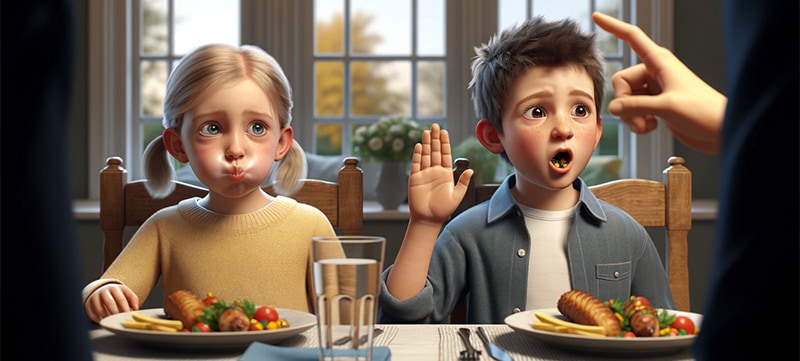
How to teach children not to talk with a full mouth.
Use these ideas as a guide. What matters is consistency and Positive reinforcement.
Remember that teaching your children not to talk with a full mouth is a way to encourage good manners and respect for others. With patience and consistency, you can help them develop this skill, which will be useful in everyday and social life.
If you are working on “Not talking with a full mouth”, these related tips from the same category can help as practical next steps:



In addition to this habit, many families also work on these rules at home:


Explore more guides that connect “Not talking with a full mouth” with other family habits:
From an early age, they can begin to understand the rule with simple explanations and consistent reminders adapted to their age.
Remind them of the rule calmly, avoid scolding too much, and reinforce positively when they do it correctly.
Whenever possible, correct discreetly to avoid embarrassment and support positive learning.
It is more effective to use positive reinforcement and clear explanations than to rely on punishments, which can create resistance.
It depends on the child, but with patience, consistency, and daily practice during meals, they will eventually integrate it naturally.