Home Tips List Tidying up toys
Parenting tip
Home

How to teach children to tidy up toys after playing

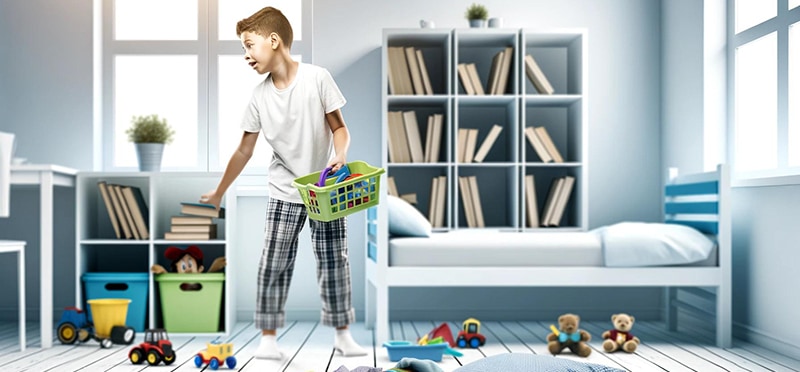
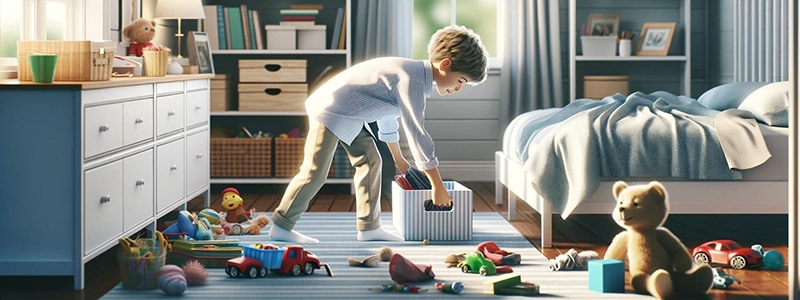
Teaching your children to tidy up their toys is an important skill that helps them develop responsibility and keep order at home.

Many parents face resistance, inconsistency, and arguments when trying to teach toy tidying, especially when children are tired or want to keep playing.

Here you will find simple recommendations that can make the task easier Apply them and track results in the app from Motikids..

Motikids tip: Tidying up toys

Practical tips

Use these ideas as a guide. What matters is consistency and positive reinforcement.

Set a specific place

  • Assign a specific place to store your children's toys, such as a box, shelf, or chest.
  • Explain the importance of putting toys back in their place after playing to keep order at home.
  • Use this moment to teach by example, tidying up too and showing how to do it calmly.

Create tidying routines

  • Set daily or weekly routines for tidying toys, and involve your children in this process.
  • Routines will help them internalize the responsibility of tidying their toys and turn this task into a habit.

Motivate with praise

  • Praise your children when they tidy their toys correctly, highlighting their effort and cooperation.
  • This will motivate them to keep doing it and teach them the value of responsibility.

Divide the task into steps and use a timer

  • Divide tidying into small steps, for example first blocks, then stuffed toys, and finally cars, so the task is more manageable.
  • Use a 5- to 10-minute timer and turn it into a friendly challenge to keep attention and prevent tidying from dragging on.
  • When finished, review the result together and make clear what counts as "tidied up" to avoid confusion and reinforce the habit.

Make the most of Motikids

  • Record when they have completed this task so they earn stars.
  • When they have enough, you can give them a reward.
  • That will encourage them to keep completing it and act as an incentive.
  • Access the app.

To finish

Remember that teaching your children to tidy up their toys gives them important life skills and helps them keep order at home. With your guidance and support, they will soon be able to do this task independently and confidently.

Other tip categories

Explore the rest of the tips from other categories with practical guides for educating your children:

Frequently asked questions

What should I do if my child refuses to tidy up toys?

Stay calm, validate their emotion, and give a clear, brief instruction. Offer a choice between two options, for example picking up blocks or cars first, and stay with them at the beginning to get the task started.

At what age can children start tidying up their toys?

They can participate from a very young age. From ages 2-3 they can put away some toys with help; what matters is adjusting expectations to their age and turning it into a simple routine.

How long should tidying up take?

Short and consistent is better: 5 to 10 minutes is usually enough. If there are many toys, reduce the number available or divide tidying into short blocks.

Should I reward them every time they tidy up?

It is not necessary to reward every time. Specific praise and consistency usually work better. If you use incentives, make them occasional and aimed at reinforcing the habit, not replacing it.

How do I keep them from taking everything out again right after tidying?

Close the activity with a clear signal, for example "playtime is over," and offer an immediate alternative, snack, story, or bath. It also helps to limit how many toys they can take out at once.