Model kindness
- Show your children how to be kind and respectful to others through your own actions and words.
- Your example is a powerful tool for teaching them the value of kindness in daily interactions.

Teaching your children to be kind is essential for their personal development and establishing positive relationships with others.
Many parents face challenges such as lack of patience, environmental influence, or sibling conflicts, which make it harder to maintain kindness day to day.
Here are useful strategies to put into practice during this process Apply them and track results in the app from Motikids..
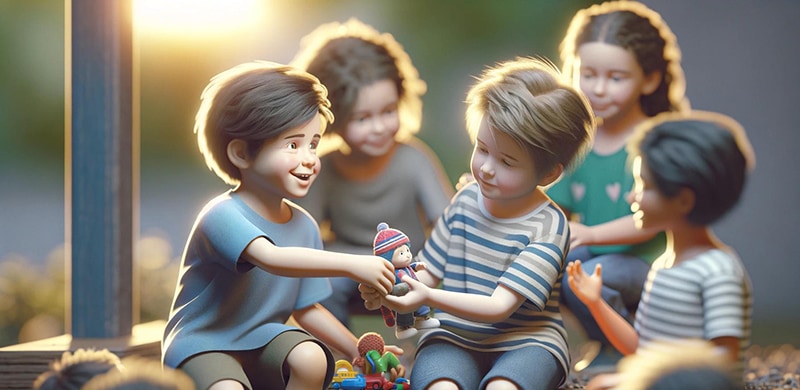
How to teach children to be kind and respectful to others.
Use these ideas as a guide. What matters is consistency and Positive reinforcement.
Remember that teaching your children to be kind is an investment in their future and in the wellbeing of those around them. With your guidance and support, they will learn to build positive relationships and contribute to a kinder, more respectful world.
If you are working on “Being kind”, these related tips from the same category can help as practical next steps:



In addition to this habit, many families also work on these rules at home:



Explore more guides that connect “Being kind” with other family habits:
Anticipate difficult situations, validate their emotion, and teach alternative phrases for responding calmly; then recognize any attempt at kindness, even a small one.
Reinforce the effort and intention more than the prize, and talk about the impact on others so they understand that kindness also has internal value.
Set clear rules of respect, intervene as a mediator by teaching speaking turns, and ask for concrete repairs, apologizing, helping, sharing, after the conflict.
From a very young age: with modeling, simple language, and routines such as greeting and saying thank you; as they grow, add empathy and conflict resolution.
Reinforce values at home with examples and conversations, practice assertive responses, and look for positive role models; if problems persist, coordinate with the school.