Home Tips List Helping with household chores
Parenting tip
Home

How to encourage children to help with household chores

Getting your children involved in household chores is an important part of teaching responsibility and cooperation.

Many parents run into resistance, inconsistency, complaints, or arguments when they try to establish routines and share responsibilities at home.

Here are some guidelines that will help you through this process Apply them and track results in the app from Motikids..

Motikids tip: Helping with household chores

Practical tips

Use these ideas as a guide. What matters is consistency and positive reinforcement.

Assign age-appropriate chores

  • Identify chores your children can do according to their age and abilities.
  • Start with simple chores and gradually increase the difficulty as they grow and gain more skills.
  • This will help them feel capable and develop confidence in their abilities.

Teach by example

  • Show the importance of helping with household chores by being a role model.
  • Do your own household tasks diligently and show a positive attitude toward them.
  • Children tend to imitate adults, so seeing your commitment will motivate them to help.

Create a reward system

  • Set up a reward system to encourage participation in household chores.
  • You can give stickers, points, or extra privileges for completing assigned chores effectively.
  • This will motivate them to help consistently and diligently.

Make it fun for them

  • Turn household chores into fun, creative activities.
  • Play cheerful music while they clean, or turn tidying up into a speed game.
  • Use these moments to teach habits of order and care for the home in a positive way.
  • This will make chores less boring and more appealing to your children.

Set clear routines and family roles

  • Define a simple, visible schedule with specific chores and assigned days so they know what is expected of them.
  • Share responsibilities fairly and explain how each chore contributes to everyone's wellbeing at home.
  • Review the plan from time to time and adjust it to their age so you build independence and commitment without overloading them.

Make the most of Motikids

  • Record when they have completed this task so they earn stars.
  • When they have enough, you can give them a reward.
  • That will encourage them to keep completing it and act as an incentive.
  • Access the app.

To finish

Remember that teaching your children to help with household chores is a gradual process that requires patience and consistency. With these tips, you can encourage values of responsibility and helpfulness that will serve them throughout their lives.

Other tip categories

Explore the rest of the tips from other categories with practical guides for educating your children:

Frequently asked questions

At what age should children start helping with household chores?

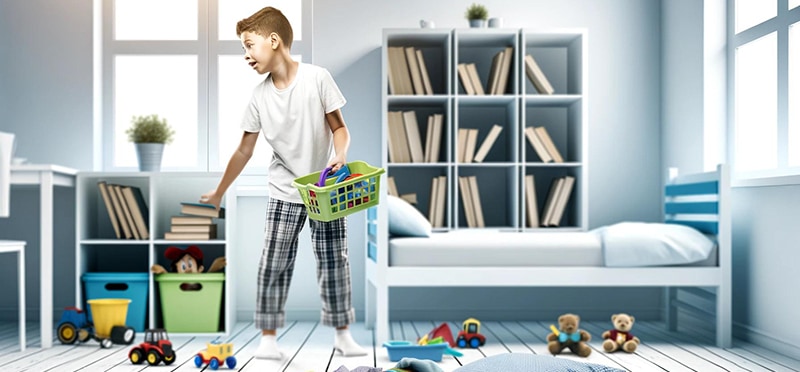
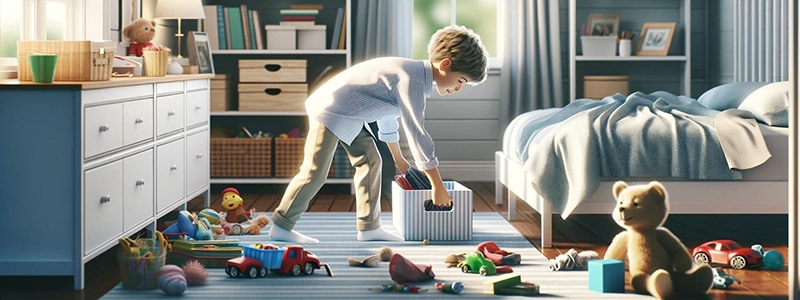
From an early age, they can help with simple chores such as putting away toys or putting dirty clothes in the basket, with responsibility increasing as they grow.

What should I do if my child always refuses to help?

Stay calm, set clear expectations, offer limited chore choices, and apply consistent consequences; consistency usually reduces resistance over time.

How do I keep chores from becoming a daily fight?

Plan ahead with fixed routines, short instructions, a visual reminder, and positive reinforcement; avoid negotiating every day and review the plan weekly.

Is it advisable to pay children for doing household chores?

It can work as an occasional incentive, but the foundation should be family responsibility; if used, it should be limited and tied to specific goals.

What chores are appropriate by age?

It depends on the child, but a useful guide is to start with self-care and tidying tasks, putting things away or setting the table, and then move on to simple cleaning or supervised kitchen help.