Home Tips List Putting clothes in the laundry
Parenting tip
Home

How to teach children to put clothes in the laundry when they are dirty

Teaching your children to put their clothes in the wash is an important skill that will help them develop responsibility and autonomy in taking care of their clothes and home.

Many parents deal with forgetfulness, rushing, and resistance when trying to teach the habit of putting dirty clothes in the basket instead of leaving them on the floor.

Here are some useful guidelines for working on this process at home Apply them and track results in the app from Motikids..

Motikids tip: Putting clothes in the laundry

Practical tips

Use these ideas as a guide. What matters is consistency and positive reinforcement.

Assign responsibilities

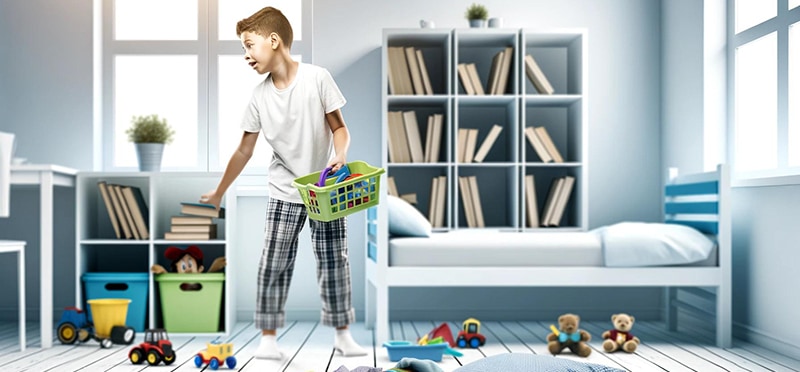
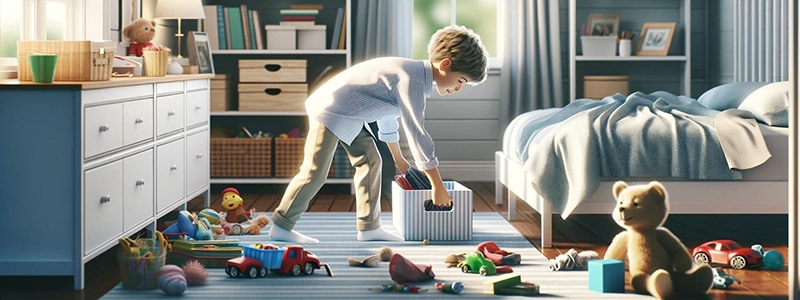
  • Assign your children the specific task of putting their dirty clothes in the laundry basket as soon as they take them off.
  • Explain the importance of keeping their clothes clean and tidy, and the need to help with household chores.
  • To teach this habit, agree on a simple, consistent rule: dirty clothes always go in the basket before doing anything else.

Create a routine

  • Set a regular schedule for doing laundry, such as once a week.
  • Involve your children in the process and let them know when it will happen so they are prepared.

Teach how to use the washing machine

  • Teach your children how to use the washing machine safely and correctly, including how to choose the wash cycle and add detergent.
  • Supervise them the first few times until they feel comfortable doing it by themselves.

Recognize their efforts

  • Praise and recognize your children when they follow through on their responsibility to put clothes in the laundry.
  • This will motivate them to keep helping with household chores and develop a sense of achievement and responsibility.

Make the habit easier with reminders and organization

  • Place the basket somewhere accessible, for example near their room, and use a visual reminder, such as a label or simple sign, so they know where dirty clothes go.
  • If it is hard for them to get started, suggest an easy system: sorting by color or garment type into two bags or baskets, so putting clothes in the laundry is quick and clear.
  • Stay consistent: at first, guide them and reinforce each small step, because daily repetition turns the action into a habit.

Make the most of Motikids

  • Record when they have completed this task so they earn stars.
  • When they have enough, you can give them a reward.
  • That will encourage them to keep completing it and act as an incentive.
  • Access the app.

To finish

Remember that teaching your children to put clothes in the laundry gives them important life skills and helps them contribute to the wellbeing of the home. With your guidance and support, they will soon be able to take on this responsibility independently and confidently.

Other tip categories

Explore the rest of the tips from other categories with practical guides for educating your children:

Frequently asked questions

At what age can you start teaching children to put clothes in the laundry?

From ages 3-4, they can start by taking their clothes to the basket with help; as they grow, they can do it alone and take on more steps in the process.

What should I do if my child always leaves clothes on the floor?

Define a clear, consistent rule, not the floor, yes to the basket; put the basket closer and reinforce when they do it well. At first, guide the action until it becomes automatic.

How can I motivate them if they say it is boring?

Turn the chore into a short challenge, for example, "before dinner, all clothes in the basket," and recognize the effort; motivation usually increases when they see results and receive positive reinforcement.

Is it a good idea to give rewards for putting clothes in the laundry?

You can use occasional reinforcers at first, stickers or choosing an activity, but ideally you should gradually replace them with recognition and a sense of responsibility.

How can we avoid daily arguments about this chore?

Simplify the system, accessible basket and one rule; build it into a fixed routine, for example when changing clothes, and avoid long lectures: one short, consistent instruction works better.