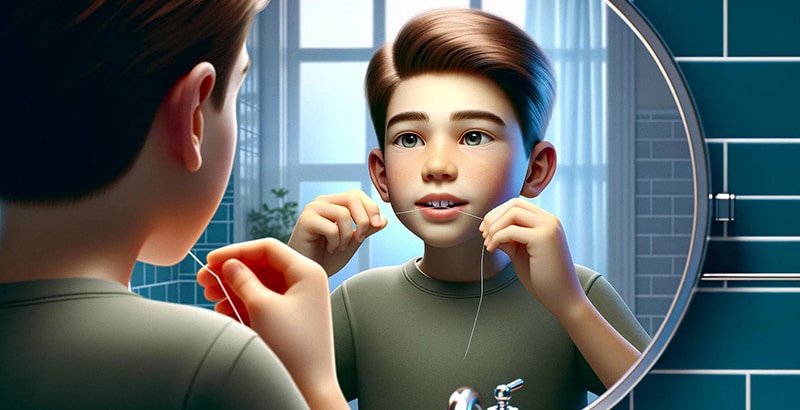
Home Tips List Using dental floss
Parenting tip
Hygiene

How to teach proper dental flossing

Teaching your children to floss is crucial to maintaining good oral health and preventing problems like cavities and gum disease.

Many parents face resistance, lack of patience, or difficulty helping their children coordinate the movement, so teaching flossing can feel frustrating at first.

Here are some easy guidelines for starting safely and consistently Apply them and track results in the app from Motikids..

Motikids tip: Using dental floss

Practical tips

Use these ideas as a guide. What matters is consistency and positive reinforcement.

Model the behavior

  • Use dental floss in front of your children so they can see how it is done.
  • Your example will be key to showing them the importance of this oral hygiene practice.
  • Use that moment to teach calmly, explaining step by step what you are doing.

Start early

  • Teach them to use dental floss as soon as they have two teeth that touch.
  • It is important to establish this habit from an early age so it becomes part of their daily routine.

Make it fun for them

  • Make using dental floss a fun and exciting activity.
  • You can use flavored dental floss or invent games to make it more appealing for your children.

Supervise and praise

  • Supervise your children while they use dental floss at first to make sure they are doing it correctly.
  • Praise their effort and improvement to motivate them to keep practicing this important oral hygiene skill.

Choose suitable tools and simplify the technique

  • If they find traditional floss hard to handle, try floss picks or holders that make gripping easier.
  • Start with one or two spaces between teeth and gradually increase, prioritizing consistency over perfection.
  • Keep a fixed routine, for example after nighttime brushing, so the habit becomes automatic and consistency is easier to teach.

Make the most of Motikids

  • Record when they have completed this task so they earn stars.
  • When they have enough, you can give them a reward.
  • That will encourage them to keep completing it and act as an incentive.
  • Access the app.

To finish

Remember that teaching your children to use dental floss is an investment in their long-term oral health. With patience and consistency, you can help them develop this habit, which will benefit them throughout their lives.

Other tip categories

Explore the rest of the tips from other categories with practical guides for educating your children:

Frequently asked questions

At what age should children start using dental floss?

When they have two teeth that touch; from that moment it can be introduced gradually with help from an adult.

What should I do if flossing bothers my child or their gums bleed?

This can happen at first if there is inflammation or if the technique is rough; use gentle movements, review consistency, and consult the dentist if bleeding persists.

How long should children floss each day?

It is not so much a matter of time as covering the spaces between teeth well; at first it may be only a few spaces, then the whole mouth.

Is regular dental floss or floss picks better for children?

It depends on their skill; floss picks are usually easier to start with, and traditional floss can be introduced later when coordination improves.

How can I help them not refuse dental floss?

Keep a fixed routine, offer choices such as flavors or floss picks, reinforce with praise, and keep it brief at first so it does not feel like a battle.